racism in music
"Music theory can be seen as a racial ideology in which the views and ideas of white persons are held to be more significant than the views and ideas of non-white persons. "
- Dr. Phillip Ewell
Professor of Music Theory

Dr. Phillip Ewell, Professor of Music Theory at Hunter College CUNY
What is inequality?
Dr. Fauci discusses how Black Americans have been historically disproportionately affected by illness and its recognition in the ongoing pandemic with rapid spread of the coronavirus (COVID-19)

What is inequality?
The Equal Justice Initiative on Terror Lynching in America (2016)
A five minute video narrated by Bryan Stevenson on the history of lynching and racial violence in America.

What is inequality?
The Equal Justice Initiative on Terror Lynching in America (2015)
A six minute video narrated by Bryan Stevenson on a brief history of slavery and its evolution to mass incarceration



In the mid 1990s, when the whiteness of music institutions was identified as a "lack of diversity", the society of music theory formed
the Committee on Diversity.
"...in order to increase the ethnic diversity of the membership of the society"
- The Committee on Diversity
The diversity factor in the field of music theory had only raised 2.9% in the next 10 years.

What does music have to do with race?
"Certain music theoretical institutions are racialized structures that exist because they benefit members of the dominant [white] race."
- Eduardo Bonilla Silva
The American education system does not teach those who are white to understand racism and vice versa:
their often profitable experiences do not awaken them to the racialized superstructure of institutionalized state.
"Whereas for most whites racism is prejudice, for most people of color racism is systemic or institutionalized,”
"When race emerged in
human history, it formed a social structure (a racialized social system)
that awarded systemic privileges
to Europeans
(the peoples who became “white”) over non-Europeans (the peoples who became “nonwhite”)."
"Racialized social systems, or white supremacy for short, became global and affected all societies where Europeans extended their reach."
- Bonilla Silva Eduardo
The term “race,” used infrequently before the 1500s, was used to identify groups of people with a kinship or group connection."
"The modern-day use of the term “race” is a human invention"
The concept of “race,” as we understand it today, evolved alongside the formation of the United States and was deeply connected with the evolution of two other terms, “white” and “slave.”"
"The words 'race,' 'white,' and 'slave' were all used by Europeans in the 1500s, and they brought these words with them to North America.
"The needs of the developing American society transformed those words’ meanings into new ideas." (nmaahc).
Dr. Phillip Ewell discusses Robin DiAngelo's book:
White Fragility: Why It's So Hard for White People to Talk About Racism.
"White persons in music theory are virtually all left-of-center in terms of politics, and it is easy for such persons to think that white rage is limited to those who are right-of-center."
"This is a grave mistake, as Robin DiAngelo often states in her book White Fragility: Why It’s So Hard for White People To Talk about Racism."
"When liberal whites believe that problems of racism are limited to those who are right-of-center, it makes it virtually impossible to achieve any positive change in music theory with respect to racial justice."
"Any person, white or nonwhite, can fall victim to the fallacies that Carol Anderson describes above.
However, white persons are far more susceptible to fall victim to these anti-black fallacies and the white rage that so often accompanies them, and this is true for all white persons regardless of their politics."
Do you struggle talking
about racism?
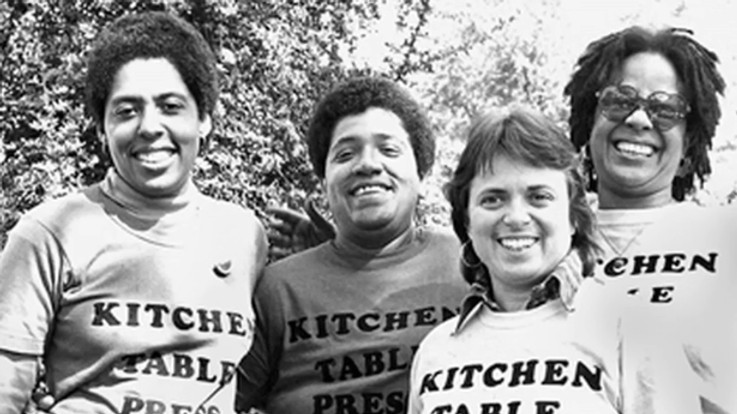
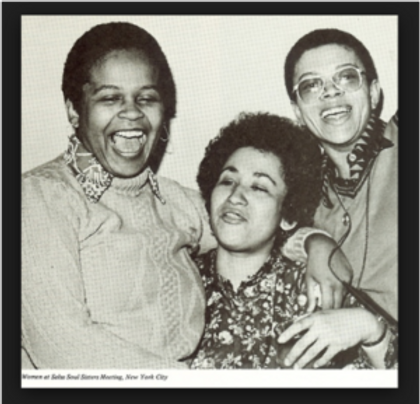
"The Combahee River Collective described oppressions as 'interlocking' or happening 'simultaneously,' thus creating new measures of oppression and inequality."
"In other words, Black women could not quantify their oppression only in terms of sexism or racism, or of homophobia experienced by Black lesbians. They were not ever a single category, but it was the merging or enmeshment of those identities that compounded how Black women experienced oppression." (How We Get Free, 4)
"The women of the CRC were not the first Black women to recognize their position in American society. "
"This historic insight was captured, perhaps most succinctly, by Black writer and public intellectual Anna Julia Cooper in 1892:"
"'The colored woman of to-day occupies... a unique position in this country. . . . She is confronted by both a woman question and a race problem, and is as yet an unknown or an unacknowledged factor in both.'"
(How We Get Free, 5)